
A door that won’t close. A faint mud line near a window frame. Most homeowners don’t think about termites until something like this shows up, and by then the activity behind the wall has usually been going on for months. That’s the real argument for residential termite control: catching it early turns a maintenance job into a small one, instead of a repair bill you didn’t see coming.
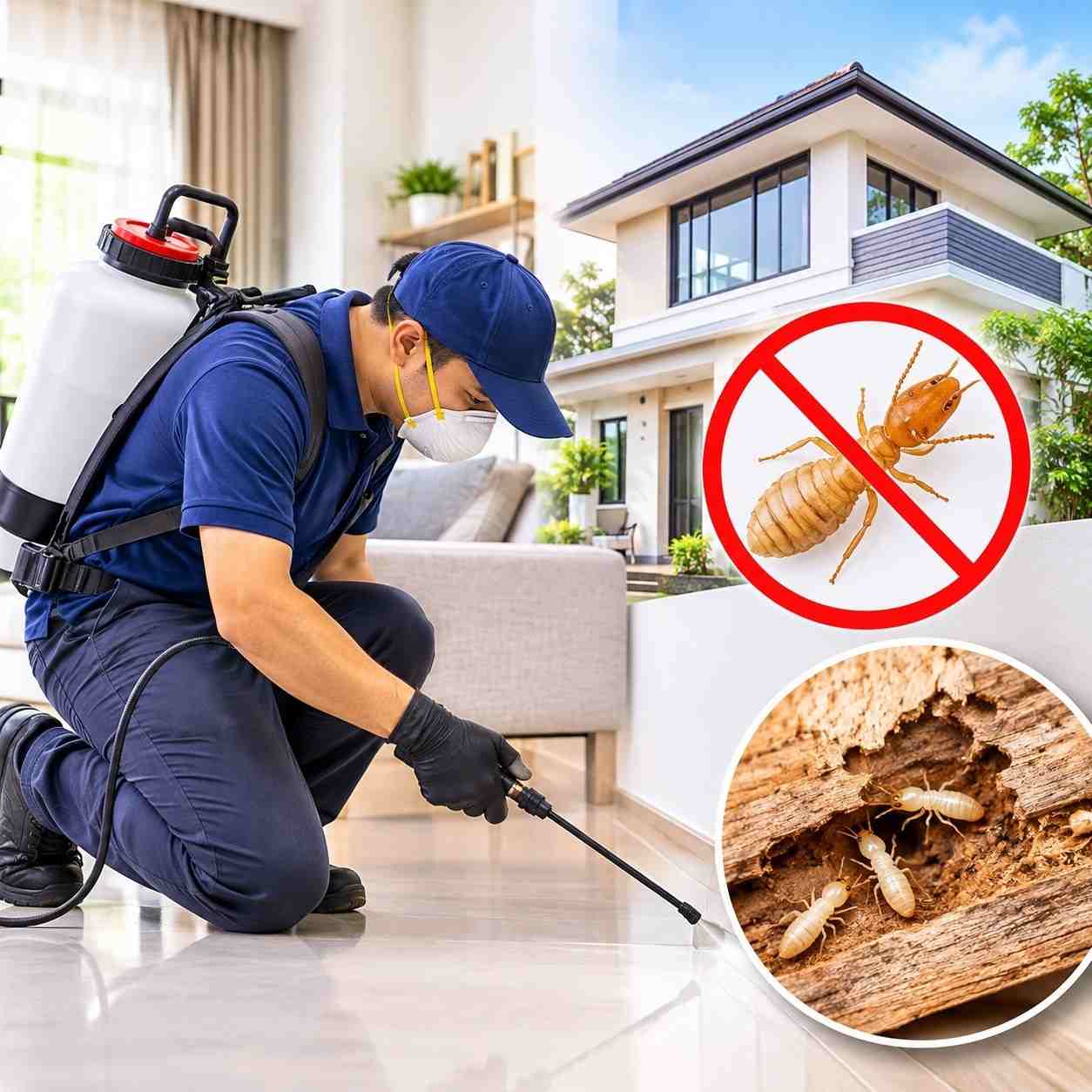
Where Do Termites Enter Residential Properties?
Termites don't need much. Subterranean colonies move through soil and look for any point where the ground touches the structure, a hairline crack along the foundation, a gap where plumbing cuts through a slab, soil banked up against an exterior wall after landscaping work. Any of it works.
Once inside, they go for structural timber first. Door frames, skirting, roof trusses, whatever keeps the colony fed. Drywood termites skip the soil step entirely. They arrive through furniture or timber fixtures that already carry an infestation, which is exactly why homes with almost no exposed ground-level wood still end up with a problem.
Request a Free QuoteWhich Homes Need Termite Protection?
Every property carries some risk. What changes is where that risk sits.
Landed Houses and Terrace Homes
Landed homes face the most direct exposure, and older terrace houses especially. A lot of terrace properties built before the 1990s have timber door frames sitting close to ground level and foundations that have settled unevenly over the decades. Garden soil piled against an exterior wall doesn’t help either. Soil treatment around the perimeter tends to be the first thing worth looking into for this type of property.
Condominiums and Apartments
Without ground access, subterranean termites rarely show up in condos. Drywood termites are the more likely culprit, usually arriving through furniture or shared timber in older buildings. Upper floors aren’t automatically safe just because there’s no soil contact.
Older Homes and Renovated Properties
Older properties may predate standard termite-proofing during construction, so gaps exist that newer builds wouldn’t have. Renovations carry their own risk too. New timber going in untreated, or construction work disturbing a soil barrier that nobody thought to check or replace afterward.
Termite Treatment or Prevention: What Does Your Home Need?
Depends entirely on whether termites are already active, or whether the point is keeping them out in the first place.
Treatment for Existing Termite Activity
A confirmed termite colony requires direct and professional treatment. Drilling and injection methods can be used to treat both drywood termites within timber and subterranean termites living underground. The aim is stopping the spread before it reaches more of the structure.
Preventive Treatment for Vulnerable Areas
Older construction, exposed timber, a few termite cases reported nearby, any of these point toward preventive treatment even without visible activity yet. A soil barrier installed before signs show up almost always costs less than treating an active infestation later.
Ongoing Termite Monitoring
Treatment isn’t a one-off event. Bait stations and periodic checks catch new activity early rather than months in. This matters most for homes that have dealt with termites before, because the odds of recurrence stay higher there than for a property with no history at all.
What Should Homeowners Expect During a Termite Assessment?
A full walkthrough, not a glance at the one spot that looked off. Foundation, timber fixtures, roof void, anywhere moisture collects. The technician should come away able to say whether termites are active, which species it is, and how far any damage has already spread.
This part is usually free. Treat it as the thing everything else depends on. A plan built on a proper assessment holds up a lot better than one built on a quick look and a guess.
How to Protect Your Property After Termite Treatment
Treatment lowers the risk. It doesn’t make a property immune forever. A few habits help:
- Fix leaking pipes and taps quickly, damp timber draws termites fast
- Keep soil below the property’s termite-proofing line instead of banking it against exterior walls
- Don’t stack firewood, old furniture, or scrap timber near the house
- Check roof voids and ceiling spaces now and then, even with no obvious signs
- Book a follow-up inspection annually, more often if the property’s had termites before
Why Choose PestGuard Solution for Your Home?
PestGuard Solution inspects the property first and builds the plan from what’s actually found there. No quote handed out before anyone’s set foot on site. Technicians train to proper safety standards, and every product used stays eco-friendly, which matters with kids or pets in the house.
Frequently Asked Questions
Book Your Free Residential Termite Inspection Today
A sticking door. A faint line of mud near a wall. None of it resolves by waiting. Book a free inspection and find out what's actually going on before it turns into something bigger.
Contact us